
Appliances are not just selections, they are layout decisions.
I used to think appliances came after cabinetry and design choices. What I learned instead is that they quietly determine how a home functions, how people move through it, how spaces feel, and sometimes even what compromises have to be made later.
The Goal of the Property Changes Everything
One lesson that became very clear is that appliance planning depends heavily on what the property is meant to be.
A personal home, a long term rental, and a short term rental all function differently.
In a traditional home, a large pantry makes perfect sense. Storage adds comfort and long term convenience.
But in a short term rental, guests typically do not need oversized pantry storage.
Looking back, I realized the pantry in this project did not need to be as large as it was.
That space could have been used differently, for example, recessing the refrigerator into the pantry area and allowing for a full depth, full size fridge to sit cleanly within the layout.
Instead, I kept the full pantry and placed the refrigerator beside it, which led me to choose a counter depth refrigerator.
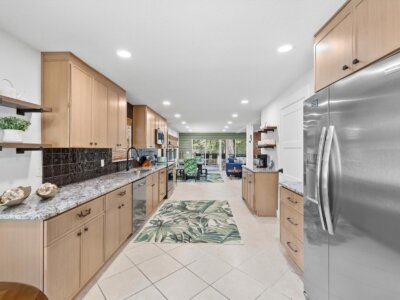
This view shows how the counter-depth refrigerator maintains a flush line with the cabinetry to keep the walkway clear.
It was not a mistake, just a moment where I realized later that I could have planned differently earlier.
And sometimes remodeling is exactly that, learning, adjusting, and accepting decisions once they are already in place.
Appliance Depth Matters More Than You Think
Another unexpected lesson came from the laundry area.
The original plan was to install a stackable washer and dryer. On paper, it felt like the most space efficient solution.
But once installed, the unit projected too far into the hallway.
The depth of that specific model required more clearance than anticipated, and the hallway immediately felt tighter than it should have.
The solution was switching to two standard Whirlpool units placed side by side:
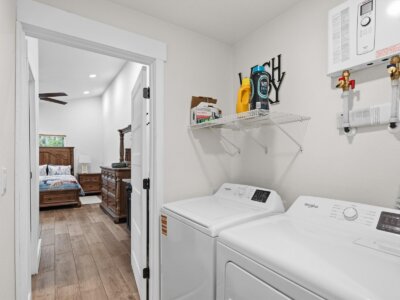
Switching to side-by-side units ensured the appliances didn’t protrude into the high-traffic hallway leading to the bedroom.
- 27 inches each
- approximately 30 inches of depth clearance instead of 33 inches
That small difference changed how the hallway felt and restored the flow of the space. I was also quietly grateful to still be within my timeframe to swap the units.
It was a reminder that appliance depth can impact circulation even more than width.
Flow vs. Function
A layout can look balanced on paper and still feel different in real life.
Appliance placement affects:
- walking paths
- hallway clearance
- door swings
- prep space
- how people naturally move through a home
Sometimes symmetry looks right visually but does not work practically.
Function reveals itself in daily use.
Remember the Drywall Thickness When Planning
One detail that is easy to overlook is the thickness of drywall.
When walls are open during framing, spaces feel slightly larger than they will once finished.
Drywall typically adds about ½ inch of thickness on each side of a wall. That small change can affect clearances around cabinets, appliances, and tight layouts.
When planning appliance placement before walls close, it is important to account for that reduction in space.
An extra half inch may seem minor, but in tight layouts, it can make a real difference.
Do Not Forget the Vents
One of the most common oversights in remodel planning is venting.
Some vents must be partially installed before drywall closes the walls or ceiling. Once closed, correcting vent paths becomes significantly more invasive and costly.
For example:
Bathroom Vent Fans
Bathroom exhaust fans often require ducting through the ceiling before drywall is installed. Afterward, routing those vents becomes much more complicated.
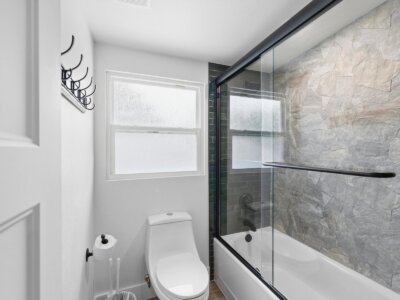
Proper planning for the bathroom exhaust vent was essential before finishing the walls with this custom stone tile work
Dryer Vent Location
Dryers require proper venting to the exterior. The placement of the unit determines how that vent line runs through the wall or ceiling.
Microwave Venting
This was one area I overlooked.
Many over the range microwaves are designed to vent outside through ductwork, either upward through the roof or horizontally through an exterior wall.
Because I had not planned the vent route early enough, I had to ensure the microwave I selected had a self venting, recirculating option.
A self venting microwave filters air and recirculates it back into the kitchen rather than venting it outside.
It works, but planning for an exterior vent earlier would have been the better long term solution.
Hindsight Is Part of the Process
One thing this remodel continues to teach me is that clarity often comes after decisions are already made.
You start to picture how people will move through the space.
How doors open.
Where people naturally gather.
And occasionally, you think, I would have planned that differently.
That does not mean the layout failed, it means experience is evolving.
Plan Appliances Before Walls Close
This lesson connects back to everything in the series so far.
Before drywall goes up, appliance planning should account for:
- electrical placement
- cabinet depth
- hallway clearance
- ventilation
- plumbing locations, including traditional vs tankless water heaters
- drywall thickness
- vent routing
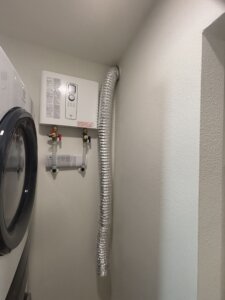
Installing the tankless water heater and dryer vent line required precise plumbing and ductwork placement before the drywall finalized the layout.
Once walls close, flexibility disappears.
Drywall does not just finish a space, it finalizes decisions.
Practical Tips From This Lesson
- Define the goal of the property first, home vs rental vs short term stay
- Always check appliance depth specifications
- Account for drywall thickness when measuring
- Plan venting early, bathroom fans, dryers, microwaves
- Tape appliance footprints on the floor before installing
- Design for daily use, not just appearance
Final Takeaway
Appliances are not decorative choices.
They define how a space works, moves, and feels.
And often, the most valuable lessons do not come from mistakes, but from recognizing how you would approach the next project differently.
Next Chapter: Planning Systems Before the Walls Close
In Part 6 of The Remodel Diaries, I will walk through lighting, mini splits, and system placement, and why planning these elements early makes everything else easier.
Want to Know More?
The Remodel Diaries (Part 4): Vanity Placement and Plumbing — Why Specs Matter More Than You Think