
Part 3: Drywall Installation Tips Why Drywall Is the Skin of Your Remodel
By the time drywall goes up, the house starts to look like a home. Walls appear, rooms feel defined, and the remodel starts to feel real. But this stage taught me something very clearly.
Drywall does not hide mistakes. It reveals them.
If framing is the skeleton and openings are the structure, drywall is the skin. And once the skin is on, every decision made before becomes visible.
Drywall Installation Is an Art
Drywall looks simple from the outside.
Hang it. Tape it. Mud it. Paint it.
But in reality, drywall installation is an art. Using a level and actually knowing what straight should look like takes experience. Anyone can hang drywall. Very few people can hang it well.
You can tell quickly when the installer has heart. They do not rush. They step back and look. They recheck lines. They care about how the room will feel when it is finished.
That kind of work shows.
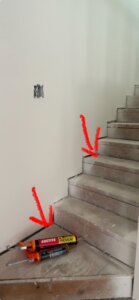
This photo shows how even small alignment details like stair height and transitions become visible once drywall starts going up. The arrows highlight spots where tiny differences can affect how polished the finished space feels.
The Frame Is the Skeleton Drywall Is the Skin
Drywall is what dresses the frame. It creates clean lines, sharp corners, smooth transitions, and a finished intentional feel.
If the skeleton underneath is not right, drywall does not magically fix it. It follows it.
This is why drywall often becomes the moment where issues finally show themselves.
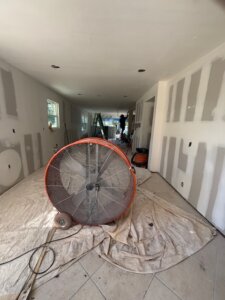
This image captures the moment when the space starts to feel like real rooms instead of construction zones. As the walls go up, you can see how drywall instantly changes the feeling of the home.
Light Is the Ultimate Judge
One of the biggest lessons from this remodel was how honest light is.
Once drywall is up and light hits the walls, waves show up. Seams become visible. Corners reveal themselves. Walls that are slightly off suddenly feel obvious.
That is not drywall failing. That is drywall doing its job.
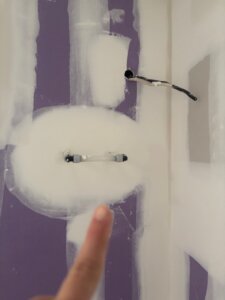
Here you can see rough wiring and unfinished details that become noticeable once walls are closed in. This is the stage where you realize how important planning and precision are before finishes go on.
Let’s Talk About Mudding Honestly
Mudding does help.
It can fix small imperfections.
It can even correct some bigger issues.
But mudding is an extra step that still has to be done right.
The mistake is relying on “we will just mud it later.”
Great drywall work starts with proper installation. Mudding should enhance the work, not rescue rushed or careless decisions.
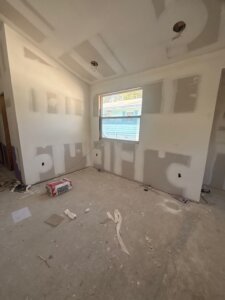
This close up shows how drywall and finishing work begin to smooth out the space, but also how every surface detail becomes more visible as you get closer to the final look.
Older Homes Need Skill Not Force
If you are remodeling an older home, especially one that is 50 to 100 years old, perfection is not always possible. Walls shift. Lines move. Nothing is perfectly square.
That is where experience matters.
This is where shims can work wonders and we will talk more about that in later chapters. It is not about forcing everything to be perfect. It is about understanding what you are looking at and knowing how to adjust properly.
The Takeaway Drywall Shows the Truth
Drywall is the moment where good framing feels effortless, thoughtful planning pays off, and shortcuts become permanent.
When drywall is done right, you barely notice it.
When it is done wrong, it is all you can see.
And that is why it deserves more respect than it usually gets.
Next Chapter Teaser Part 4
In Part 4, we will talk about vanity placement and plumbing and why choosing your vanity or at least knowing the specs before rough plumbing can save you from expensive fixes later.